Current exhibitions and displays
Somerville College through the decades
Our current Loggia exhibition explores the history of the college.
1879-1912
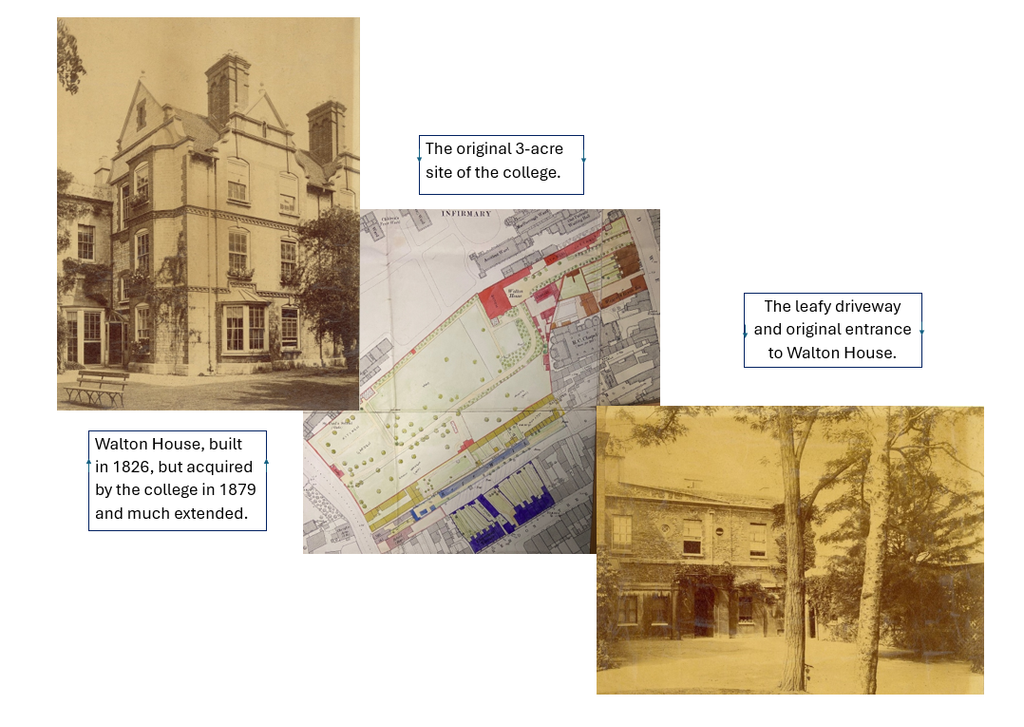
In October 1879 Somerville Hall admitted its first 12 students. The hall occupied Walton House (now known simply as House), a two-storey stone villa built in 1826, sitting in the middle of a 3-acre site which contained an orchard, paddock, vegetable garden, stables and outhouses.
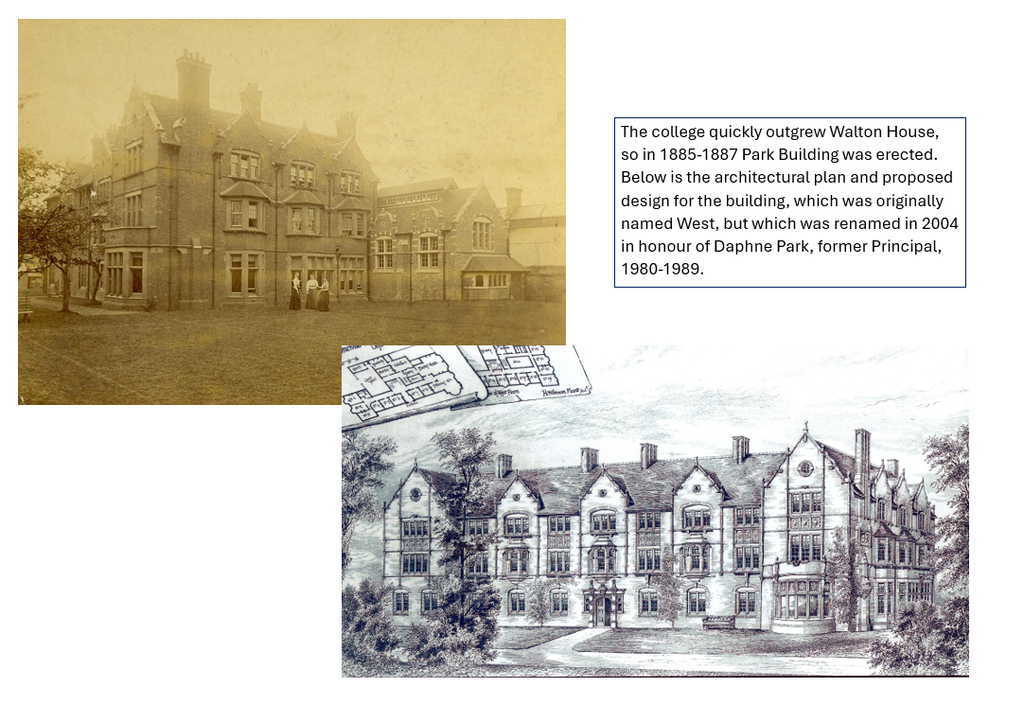
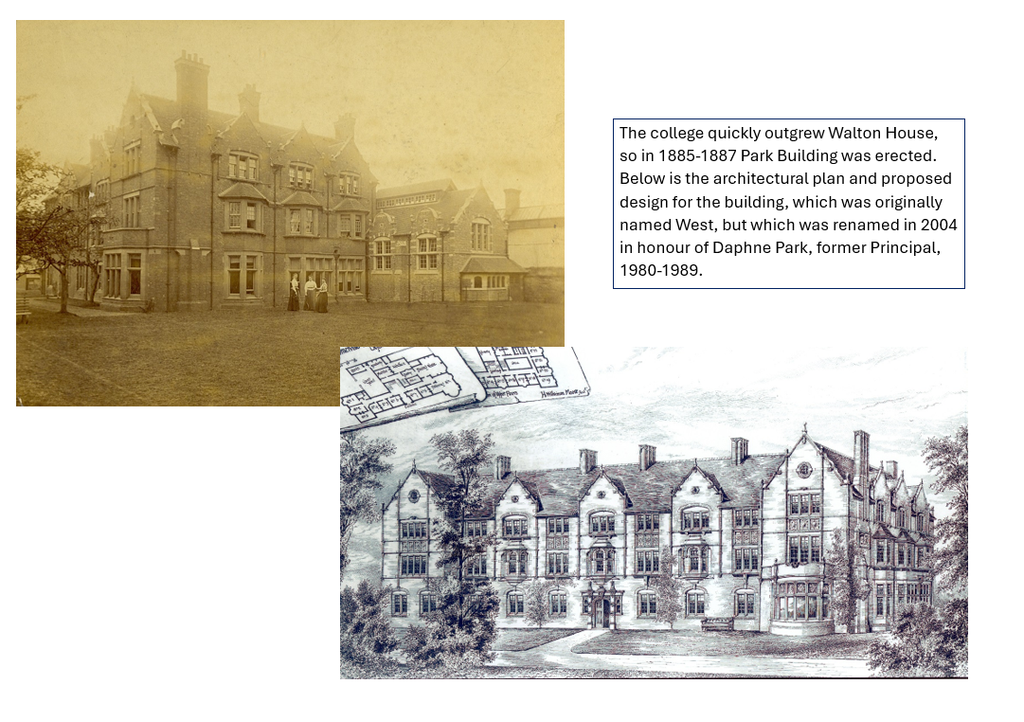
Barely large enough to accommodate all the students and staff from the outset, plans were drawn up to add a wing to House in 1881, and a new building was constructed at the west end of the site in 1885.
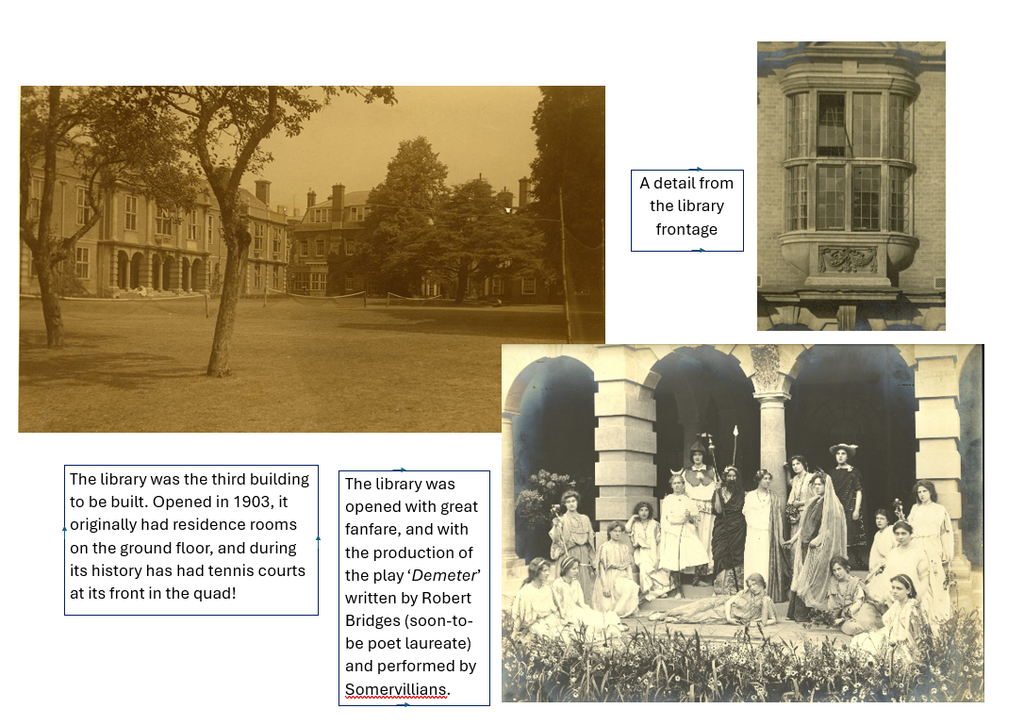
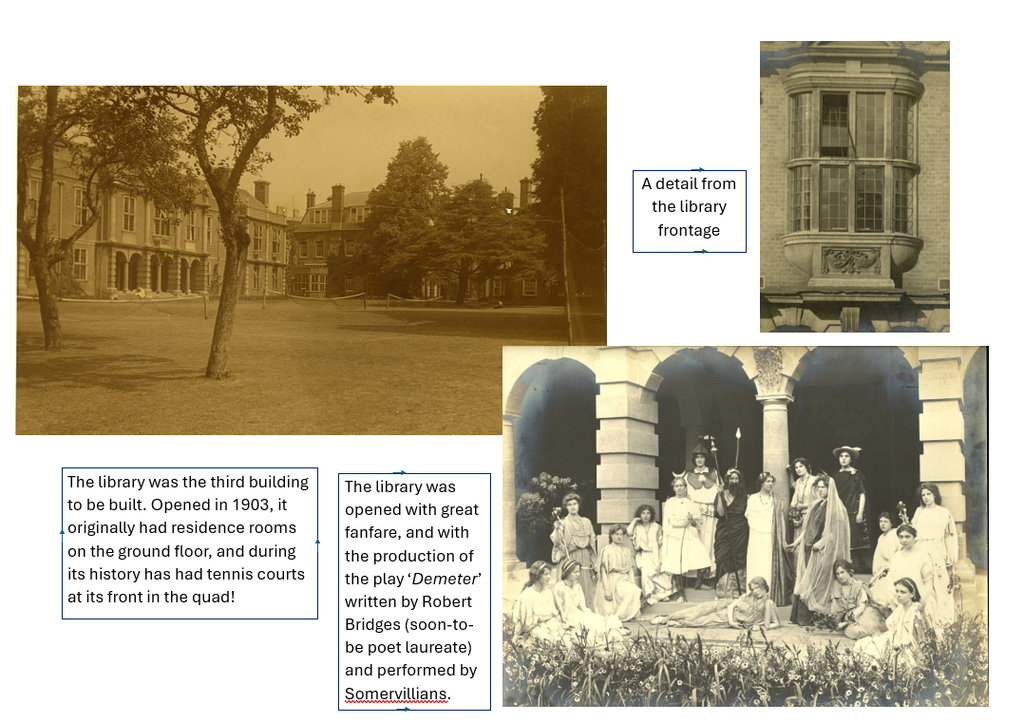
As Somerville developed from a hall of residence into a college, its needs changed and the college buildings reflected this. Resident tutors as well as growing numbers of students required accommodation, and the students needed a library. House was extended again in 1892, West in 1894 and Somerville became the first of the women’s colleges in Oxford to add a library, completed in 1903.
Today House is the administrative centre of the college, with the Academic Office, Treasury, Development and HR, among other departments, accommodated over three floors and a warren of corridors. West, renamed Park after Daphne Park (Principal in the 1980s) contains student accommodation, teaching rooms and the IT Helpdesk, and the library is one of the largest college libraries in Oxford.
1913-1920
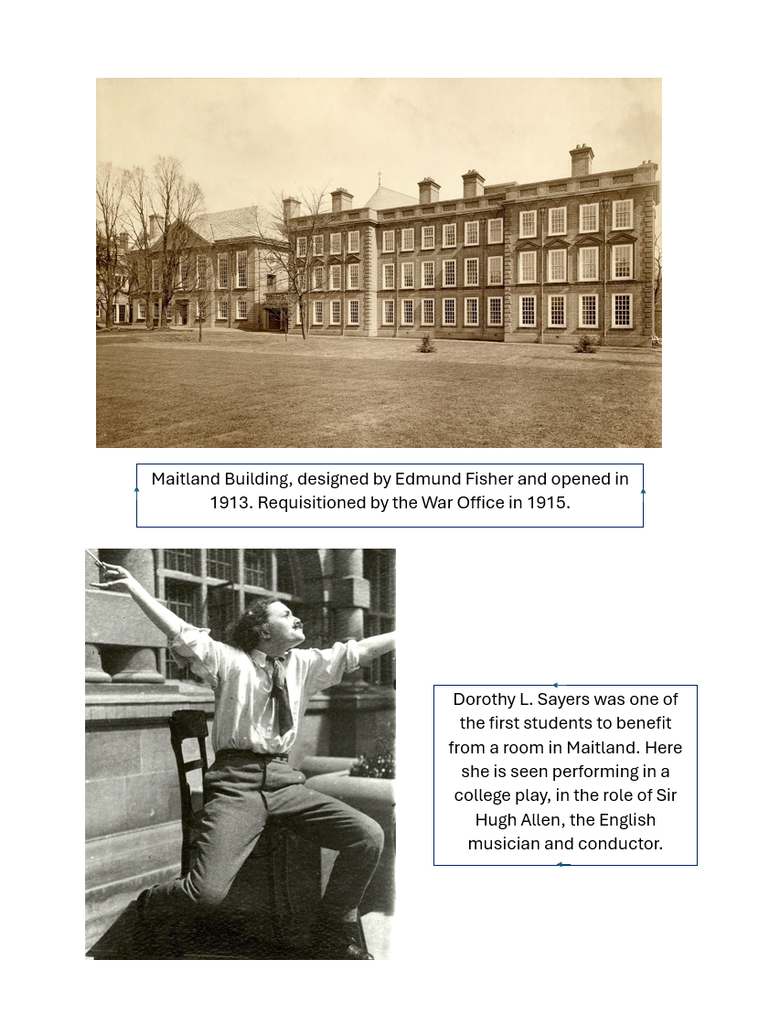
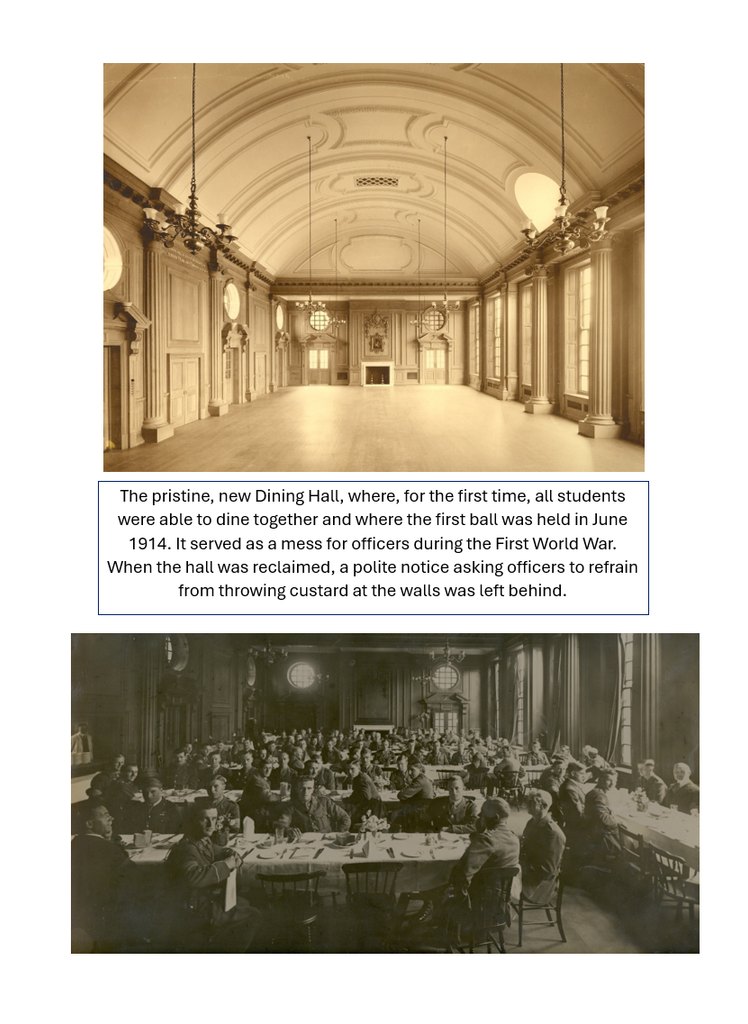
Until 1913, Somerville was a divided college, as the students lived, ate and socialised in two different buildings. A friendly rivalry developed between the occupants of House and West, ending only in 1913 with the construction of a dining hall large enough to accommodate all the students together. Maitland Hall and the Maitland Building next door were named after the college’s second Principal, Agnes Maitland. In addition to dining, the hall was used for lectures, plays and praised for the excellence of its floor for dancing, but within two years, it had another use – as a hospital ward.
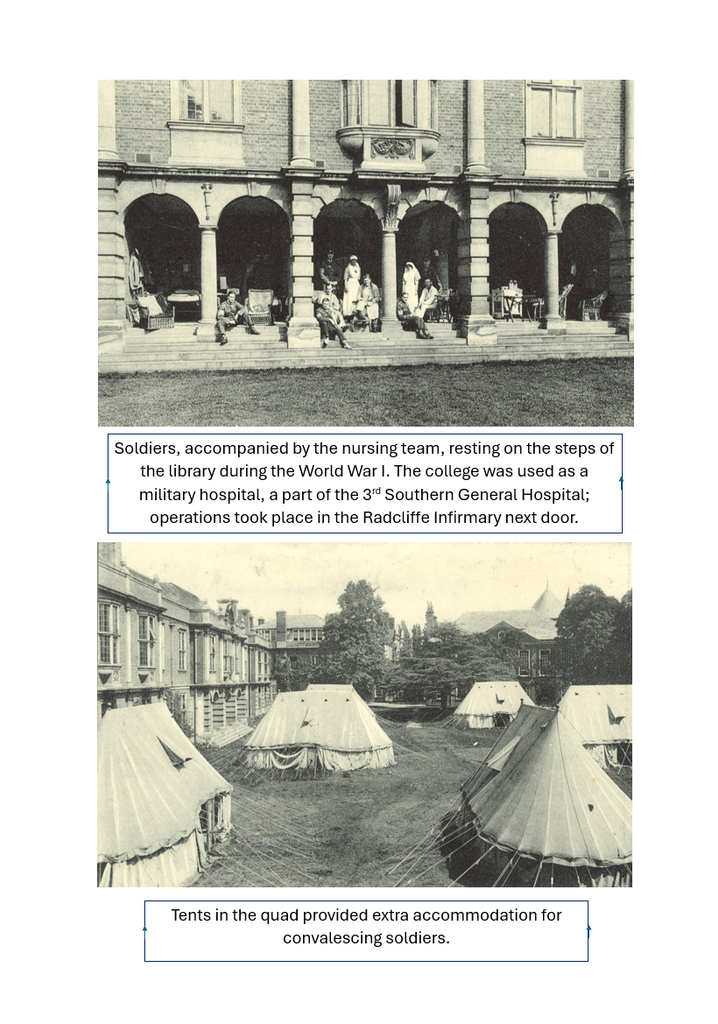
Somerville, next door to the Radcliffe Infirmary, was the perfect location for a military hospital. During the Easter vacation in 1915, the college moved out (to Oriel), and the Woodstock Road site was converted into the Somerville Section, 3rd Southern General Hospital. It was returned to the college authorities by the War Office in the spring of 1919.
The First World War accelerated social and political change for women across the country. In Oxford, the conflict altered the position of, and attitudes to, academic women; they had effectively kept the University going. After the war, the decades-long campaign to have women admitted to degrees finally succeeded, thanks in no small part to Emily Penrose, Somerville’s Principal.
1921-1949
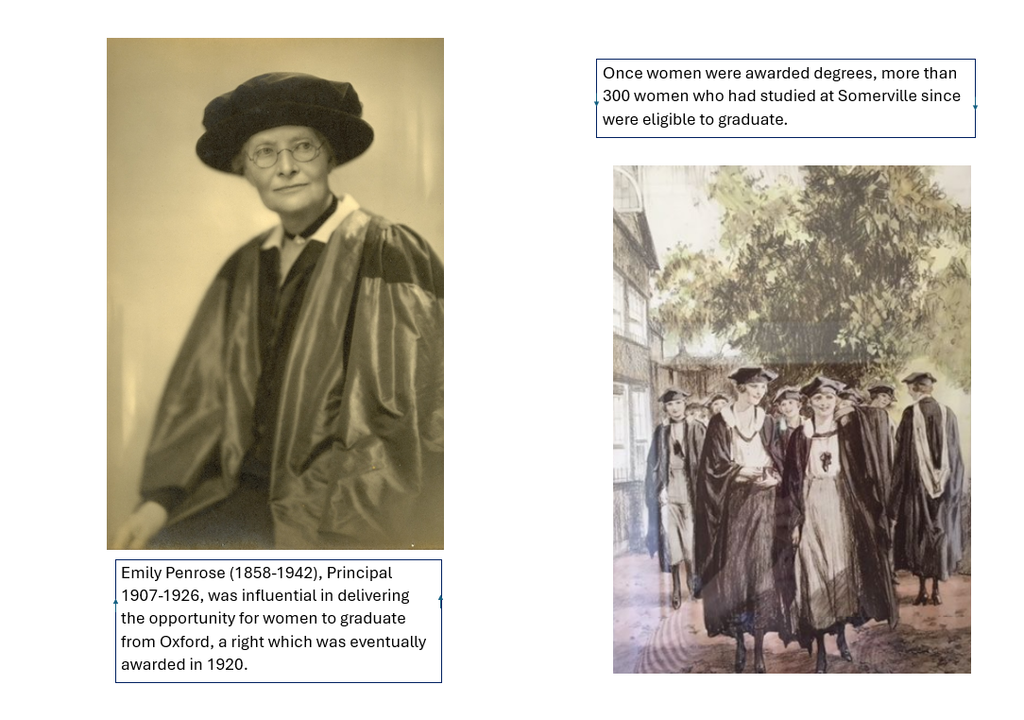
In Emily Penrose, Principal from 1907 to 1926, Somerville had a gifted academic and administrator at its helm. Vera Brittain considered her responsible, “more than any other Oxford woman”, for the admission of women to degrees in 1920. Her foresight ensured that over 300 past students were qualified to graduate once allowed to do so and, on her retirement in 1926, she became the second woman to be awarded an Honorary Doctor of Civil Law (DCL) by the University (the first being Queen Mary in 1921).
The college continued to grow and a new building, Penrose, opened in 1927, enabled all undergraduates to be housed on site. Five years later, construction of a new quadrangle, lodge and meeting room for the college Council began at the east end of the site. Originally called East, it was renamed Darbishire after Helen Darbishire, the Principal from 1931 to 1945.
In 1932, the college was offered the gift of a building ‘for the promotion of the spiritual life’ by an anonymous donor (later revealed to be former student Emily Kemp). Somerville was a non-denominational college, and the proposal of a chapel was controversial but the resulting building, intended as a multi-faith space – it bears the Greek inscription ‘A house of prayer for all peoples’ above the door – was pioneering for its time and is now well-used and much loved.
During the Second World War, the college continued to occupy the Woodstock Road site. Only West was given up to accommodate nurses from the Radcliffe Infirmary, with four isolated ground-floor rooms housing male medical students, known as ‘the Isle of Man’.
1950-1989
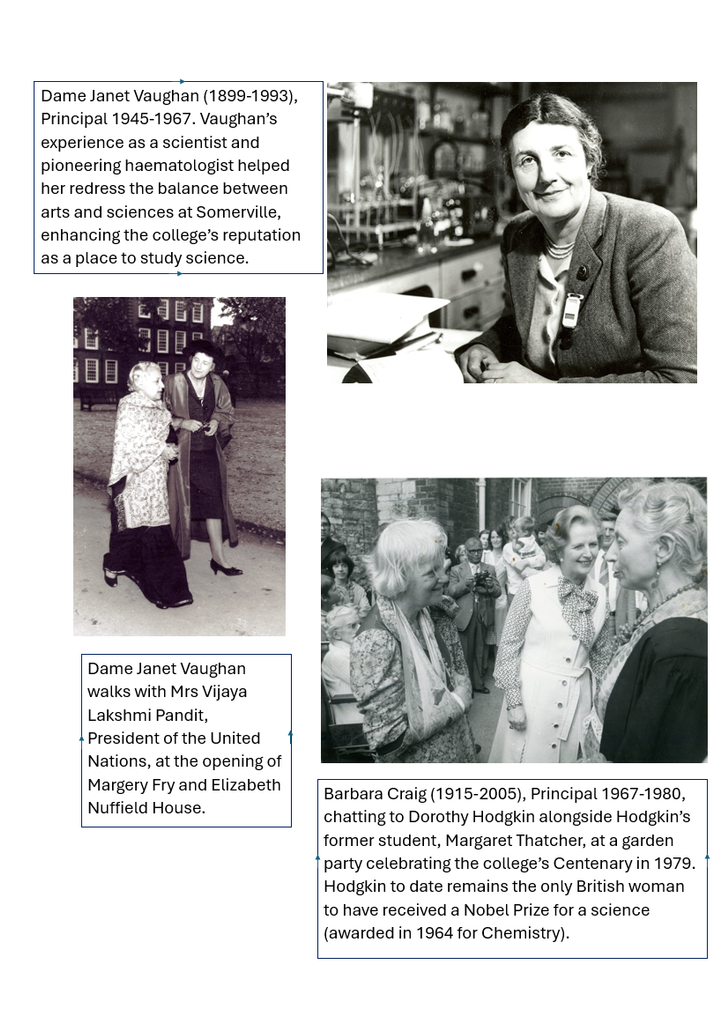
The post-war years saw great change for Somerville and the university. Janet Vaughan was the college’s Principal, the first scientist to hold this post, and at the time, the only scientist head of house in Oxford. During her tenure, the college admitted more scientists and medics and the number of graduate students increased. A library extension, with accommodation above it, was opened in 1956 and named Holtby after the alumna Winifred Holtby.
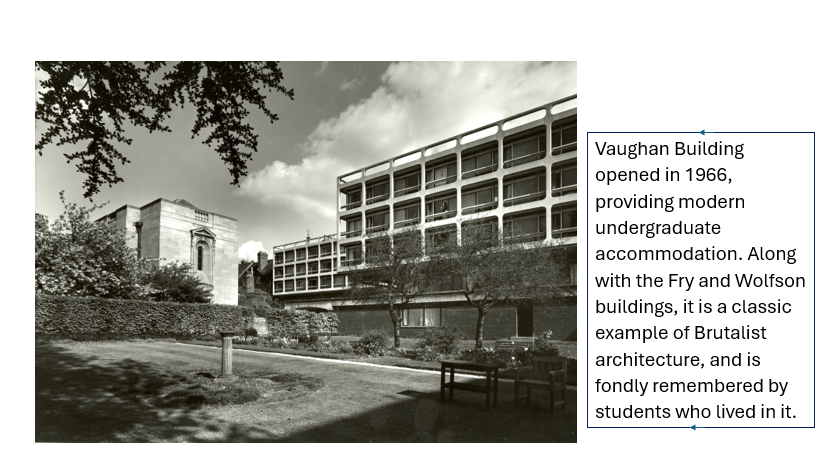
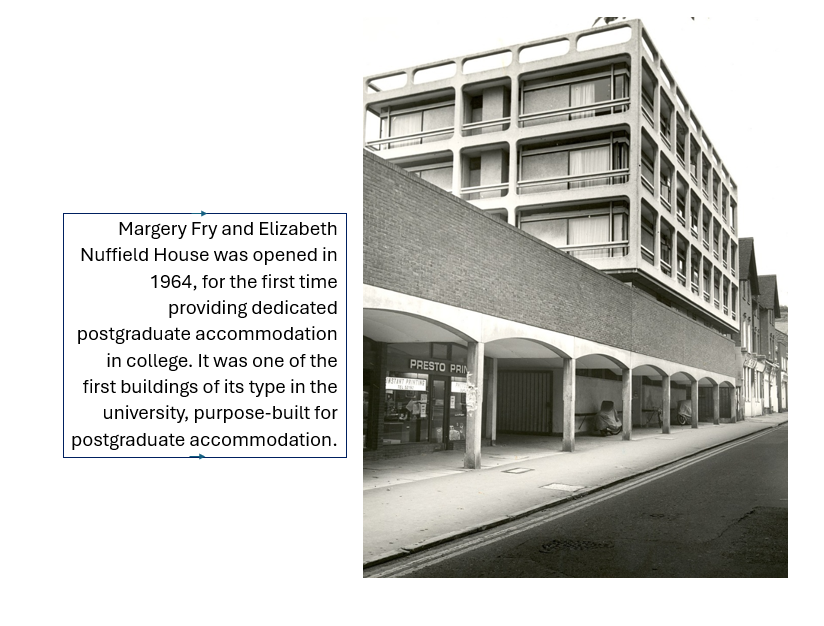
Vaughan recognised the need for proper accommodation for graduate students, many of whom had to live out of college and often some distance away. Somerville became the first college to plan the construction of a building specifically to house graduate students. Graduate House, now known as Margery Fry, was the first of three Brutalist buildings planned and constructed between 1958 and 1967.
In 1959 the women’s colleges received full status in the University and by 1964, several of the men’s colleges had begun to discuss the admission of women. The first did so in 1974, many others rapidly followed suit, and by the 1980s, the women’s colleges found themselves in a quandary, with dropping applicant numbers and concerns that academic posts open only to women would contravene sex discrimination legislation, while Somerville’s students were adamant that the college should remain single sex.
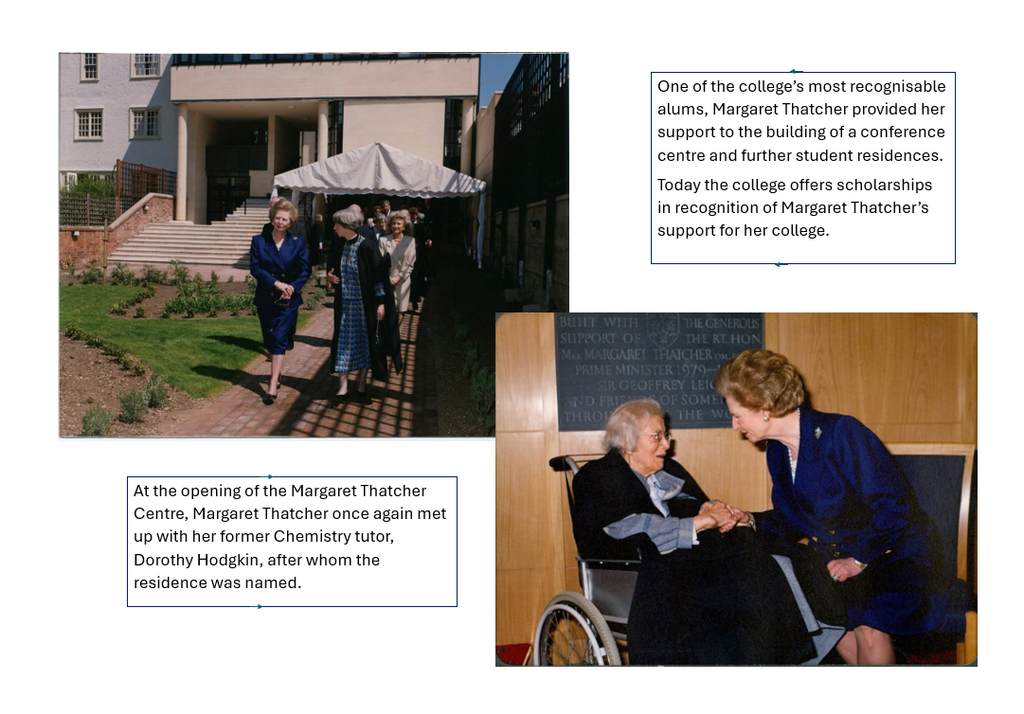
Somerville’s centenary in 1979 was a time of celebration; attendees included the first (and so far only) British woman to win a Nobel Prize for Chemistry, former tutor Dorothy Hodgkin, and one of her students, Margaret Thatcher, the first woman Prime Minister of the UK. In that same year, St Anne’s and Lady Margaret Hall admitted their first male students and the debate on what to do continued in Somerville.
1990-Present
The Dorothy Hodgkin Quadrangle (DHQ) and the Margaret Thatcher Centre (MTC) were the last two college buildings constructed in the twentieth century. The result of years of planning and fundraising by Daphne Park, the Principal in the 1980s, the MTC helped to secure the financial future of the college, providing an income stream from conference facilities.
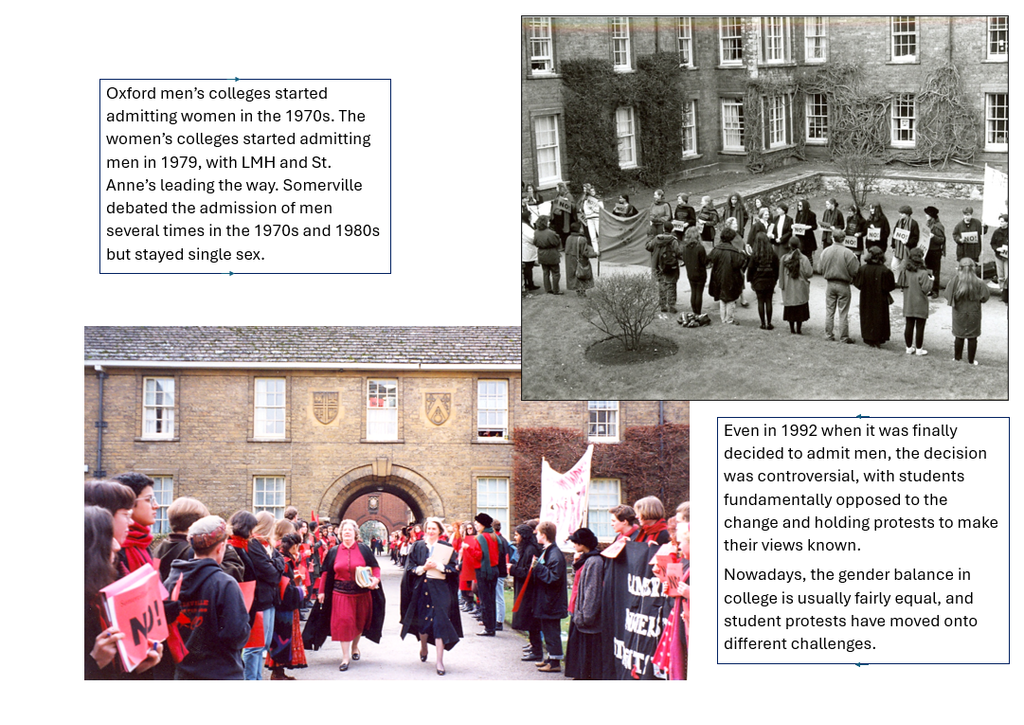
Park’s successor, Catherine Hughes, a former diplomat, needed all her skills and experience to steer the college through the admission of men. Concern over the legality of university and college appointments linked to a single sex college was the deciding factor and, in January 1992, Governing Body voted to admit men as students and fellows at the earliest possible opportunity.
The communication of the vote to the JCR was badly handled. Many students objected to the decision, others to how they were informed, and a vocal and very public protest against the admission of men began, with the JCR appealing to the college’s Visitor and some considering legal action. The Visitor ruled that the Governing Body had behaved responsibly and legally but that they should delay admission so that the JCR could become accustomed to the idea.
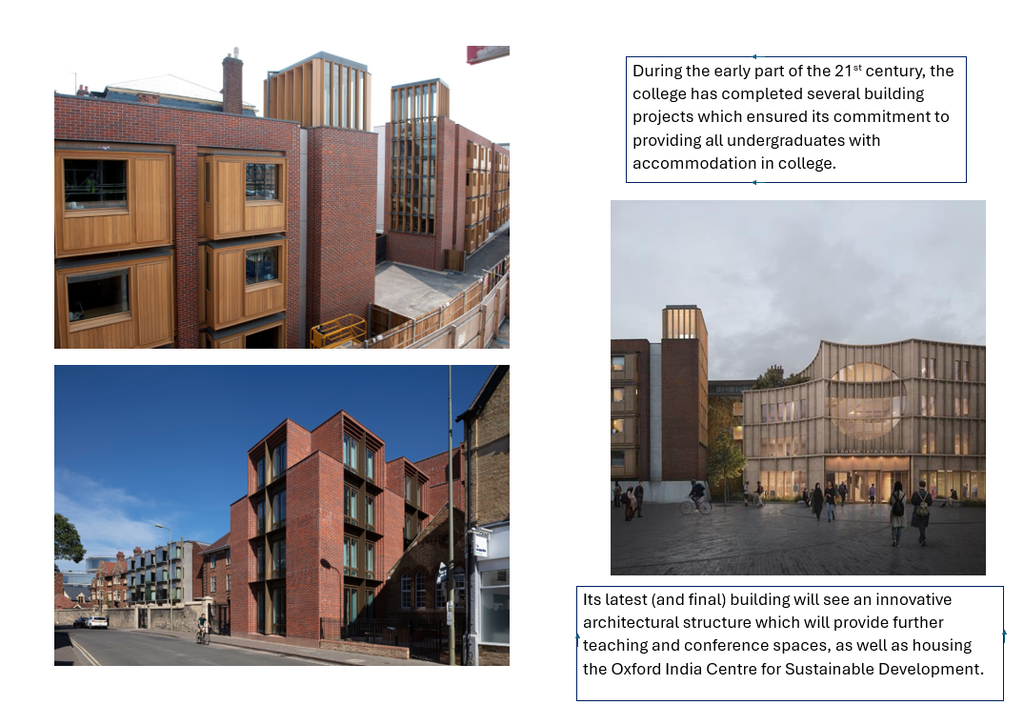
The first male students arrived in 1994 and ever since, the ratio of women to men in the JCR has remained close to 50:50. The college has continued to grow, with new accommodation provided in ROQ East and West (adjacent to the Radcliffe Observatory Quarter) and, in 2018, the addition of the Catherine Hughes Building. Somerville is now, once more, able to accommodate all its undergraduates on site.
From the early years of its foundation when Somerville enabled women to benefit from higher education, the college continues today to strive to achieve its stated aim of “including the excluded”. In 2021 the college was awarded College of Sanctuary status, it provides numerous scholarships and supports participation in higher education for many students who traditionally, perhaps, may not have applied to Oxford.
For more information about our student body demographic and the work the college carries out to continue its long tradition of education for bright students from every background, please see the Somerville College website at https://www.some.ox.ac.uk.